

Live Performance Tracking
Advanced data streams processed instantly to give you the edge in analysis and betting.
“Brazil’s high press in the last 15 mins has boosted their offensive efficiency rating by 14%.”
— Chief Analyst
“Argentina’s defensive shape is struggling with the width. Expect a tactical shift at HT.”
— Live Comm
The Critical Importance of Real-Time Data in World Cup Rankings
In the high-stakes environment of international football, particularly during the FIFA World Cup, the traditional concept of “weekly rankings” has become an archaic remnant of a slower era. Today, the difference between a sharp betting entry and a missed value window is measured in milliseconds. Real-time data is no longer a luxury; it is the fundamental infrastructure upon which modern sports analysis is built.
Our platform integrates ultra-low latency data feeds to provide what we call the “Live Delta”—the immediate fluctuation in a national team’s global standing based on current match dynamics. While the official FIFA rankings might update once a month, our engine recalculates the global hierarchy with every whistle, tackle, and transition.
The Analyst’s Edge
How Live Match Events Impact ELO Ratings
The core of our real-time engine is a sophisticated ELO-based algorithm that has been modified for the unique volatility of tournament football. Traditional ELO models are reactive, looking at results after the final whistle. Our model is dynamic.
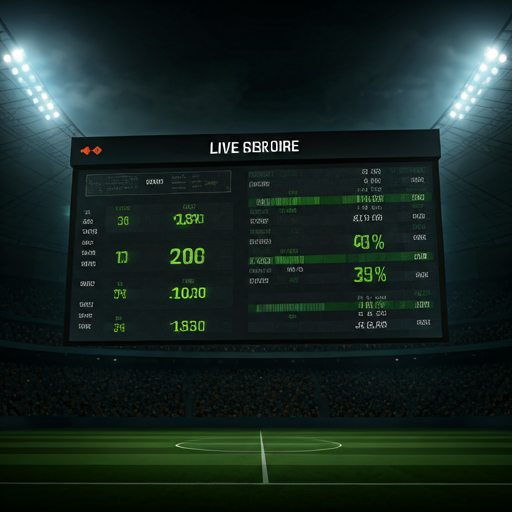

Strategic Insights: Trading the Ranking Volatility
For serious bettors, the World Cup is not just a sporting event; it’s a high-frequency trading floor. By understanding how live events impact rankings, savvy analysts can execute more sophisticated strategies:
The “Undervalued Giant” Play: When a top-tier team like France or Brazil concedes an early, against-the-run-of-play goal, their live ranking often takes a temporary hit. If our technical indicators (xG, field tilt, dangerous attacks) suggest the ranking drop is overblown relative to their performance, there is immense value in backing them to equalize or win while the market overreacts.
Momentum Hedging: If you’ve placed a pre-match bet on an underdog and our live rankings show their “Defensive Efficiency” rating is plummeting despite keeping a clean sheet, it’s a clear signal to hedge your position. The numbers often see the “breaking point” before the eyes do.
Join over 50,000 professional analysts using our real-time feed.
Historical Context: Ranking Chaos in Modern Cups
History shows that the World Cup is the most volatile environment for team rankings. During the 2022 tournament, we saw unprecedented “Ranking Deltas” during the group stages. Teams that were historically stable in the top 10 saw their live power ratings fluctuate by as much as 15% within a single half of football.
This volatility is driven by the “Tournament Weighting” factor. In a standard international friendly, a loss might move a team down 5-10 ranking points. In a World Cup knockout stage, that same loss—or even a poor 45-minute performance—can result in a catastrophic drop of 50+ points in our real-time model. This is because the competition’s prestige increases the statistical “significance” of every data point.
As we progress into future tournaments, the reliance on high-frequency data will only intensify. Fans who engage with these live updates are not just watching a game; they are witnessing the evolution of sports intelligence. We are committed to remaining the global leader in this revolution, ensuring that every user has the most authoritative, millisecond-accurate data at their fingertips.
Expert Analysis FAQ
Deep-dive into our ranking methodology and live data infrastructure.
Official FIFA rankings are backward-looking and updated monthly. Our “Live Delta” is a predictive and reactive real-time model that updates every 60 seconds during live play, incorporating micro-events like substitutions, field tilt, and xG to show a team’s true current power level.
We utilize direct Tier-1 fiber-optic feeds from stadium sensors. Our typical end-to-end latency—from a goal being scored to the ranking updating on your dashboard—is under 800 milliseconds, faster than many live television broadcasts.
Yes. Our data is designed specifically for high-volume traders and professional bettors who require more granular information than basic scoreboards. The Ranking Point Shift provides a quantitative measure of momentum that is often a leading indicator for next-goal odds.
Our algorithm applies a dynamic weighting factor based on historical venue performance and travel fatigue, adjusting the expected goal (xG) threshold for host nations in real-time.
Yes. Red cards and multiple yellow cards trigger an immediate defensive efficiency penalty in our ELO model, as they statistically correlate with a higher probability of conceding and losing possession control.